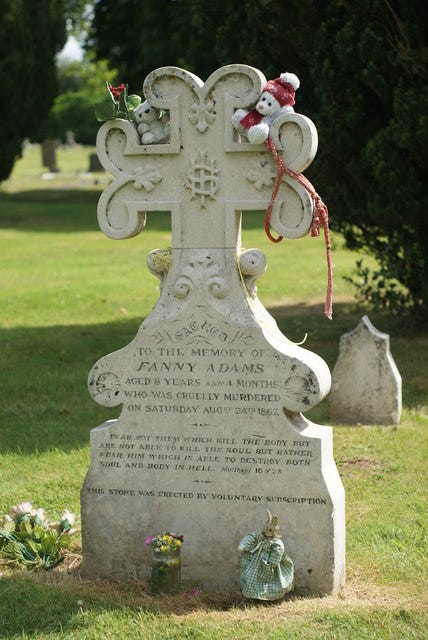

If you’re from the UK, you’ve probably heard the name Fanny Adams before, but have you ever wondered where you know it from? There’s a saying in England (I don’t know if it’s used elsewhere or whatever) but people say, “Sweet Fanny Adams”, and I’ll explain where that saying comes from at the end of the article. But this case was one of the first ever recorded to make national headlines, despite taking place in the 1860s.
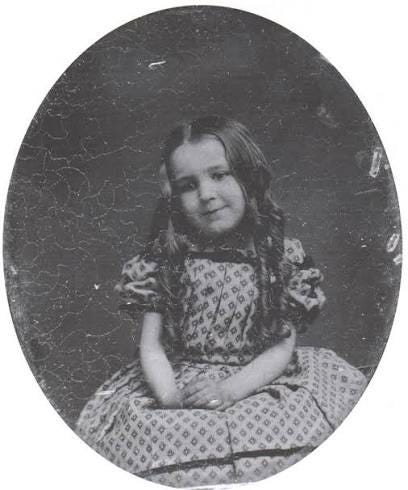
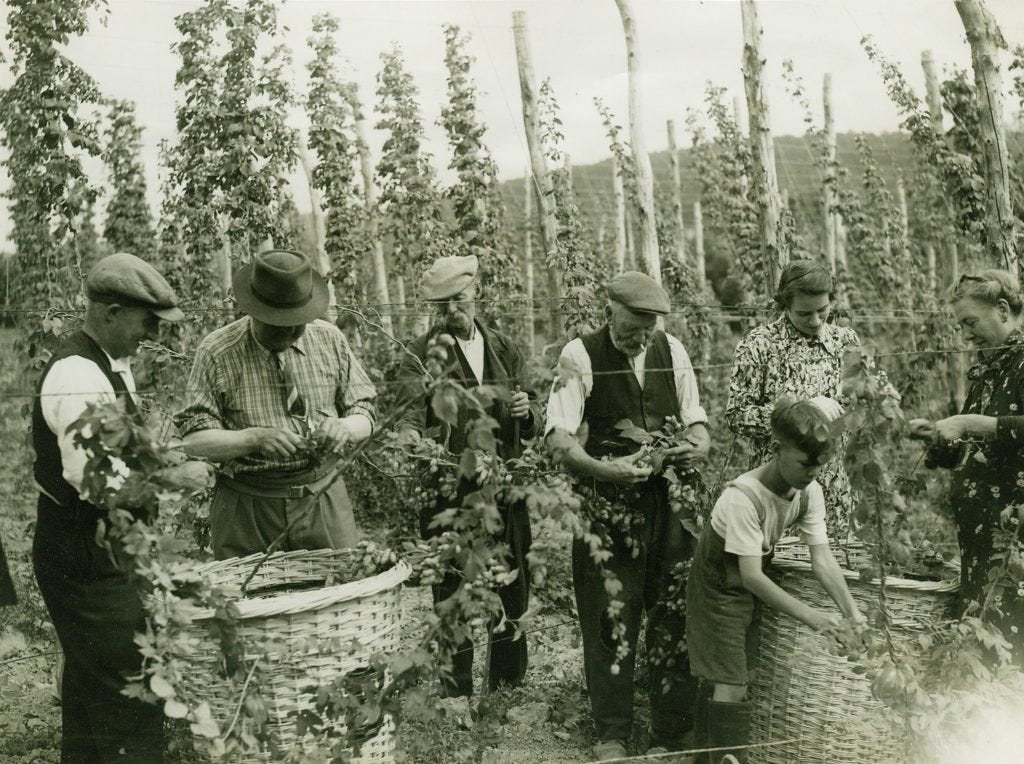
Fanny Adams was born on 30th April 1859 in Hampshire, England. She lived with her mother and father, Harriet and George Adams, along with her five siblings. In age order, the children were Ellen, George, Walter, Fanny, Lizzie and their younger brother. Fanny was the fourth child. Fanny was described as tall and very intelligent, and as looking older than she actually was. She was just eight years old, but apparently looked more like she was 13 or 14. She was known around her hometown of Alton for her cheerful, lively disposition. She was just always smiling. Every time she passed someone on the street, she’d stop to say hello and have a conversation. Fanny had a best friend named Minnie Warner, who was also eight years old. She lived just two houses away, and the pair spent almost every waking moment together. They were best friends, but they were more like sisters. Alton was well known for its supply of hops, the plant used in beer production. Because of this, the town was surrounded by hop fields and breweries, and much of its employment was tied to the production of beer.
On the afternoon of 25th August 1867, Fanny was playing in the garden with her best friend, Minnie Warner, and her five-year-old sister, Lizzie. It was a warm, sunny day, and the girls were beginning to get bored of playing in the garden. They’d been there all day, so they decided to ask Fanny’s mother, Harriet, if they could go to the meadow at the end of the lane. The meadow was called Flood Meadow and was surrounded by hop fields. It was a large open area where the girls often went to play. It was considered safe, and there was plenty of room for the girls to play, so they went there often. Harriet agreed because she wanted to do housework. She wanted the girls out of the way, and they’d been there so many times before that she trusted them. It was only at the end of the road, so she let all three of them go and play. So, the girls set off walking to the meadow. They took a shortcut through one of the hop fields, and that was when they came across twenty-nine-year-old Frederick Baker, a solicitor’s clerk in the town, who appeared friendly.
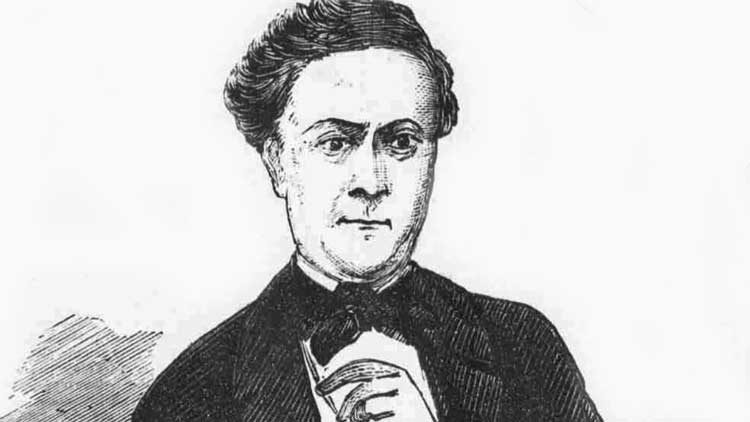
Baker was relatively new to the town. He’d been there for about two months, but the girls recognised him because he attended church every week. The whole town attended the same church, so the girls recognised his face and had spoken to him before. They felt safe talking to him.
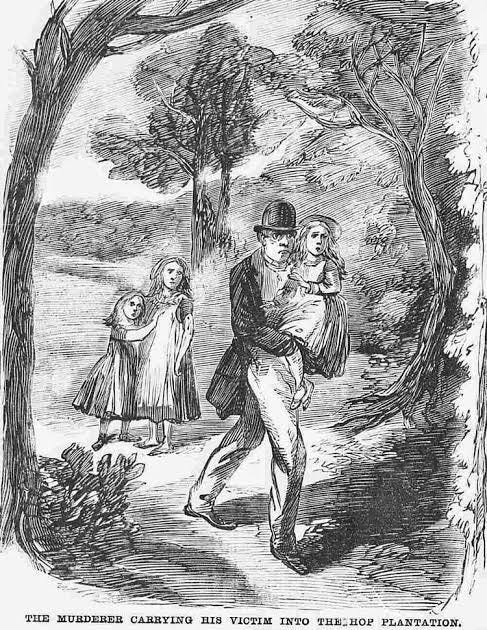
Frederick Baker picked the girls some blackberries to eat and watched them play. They were running up and down a road nicknamed the Holler. They were having fun before eventually returning to eat the blackberries with Baker. Eventually, the girls became bored and tired, and Lizzie and Minnie in particular wanted to go home. But Baker tried to persuade all three girls to stay, particularly Fanny. Baker offered Fanny half a penny to go for a walk with him, but Lizzie and Minnie wanted to come too. They didn’t want to be left by themselves. They wanted to go wherever Fanny went, but Baker didn’t want them to come. Baker then offered Lizzie and Minnie three halfpennies to go and buy themselves some sweets while he took Fanny for a walk. But Fanny refused to go for a walk with him. At that point, Baker apparently realised that he didn’t need to persuade Fanny. He was so much bigger and more powerful than her, and he simply picked her up and walked away with her as Minnie and Lizzie watched.

Lizzie and Minnie ran straight home to Minnie’s mother, Martha Warner, and told her what had happened. But Martha brushed it off. This was the 1800s, and Martha seemingly did not immediately understand the seriousness of what the girls were telling her. Martha seemed to think they were playing a joke on her, or perhaps playing some kind of game. She didn’t think that a man had picked up Fanny and taken her somewhere. Lizzie and Minnie were only eight and five years old, and Martha’s calm reaction reassured them. They thought, well, Fanny must be safe. If Martha wasn’t worried, they didn’t think they needed to be worried either. Because of Martha’s calm demeanour, the girls carried on playing. They didn’t think that anything was really wrong. They assumed Fanny would be fine because, otherwise, Martha would have been panicking.
So the girls carried on playing at Minnie’s house for a little while, before Lizzie finally decided to go home. This was around 5 p.m. Lizzie returned home without Fanny, and when Harriet realised that her daughter had been taken away by a man, she immediately became worried. Harriet ran straight to a neighbour, Mrs Gardiner, and asked her to help search the nearby fields, meadows and hop gardens for Baker and Fanny. And it wasn’t long before they found Baker. They found him in the same hop fields beside the meadow where he had originally met the girls. But Baker was alone, and there was absolutely no sign of Fanny.
Mrs Gardiner asked Baker what he’d done with Fanny. They knew that he’d picked her up and walked away with her, but Baker claimed that he’d simply given her money for sweets. He claimed that he often gave money to children around the town because he was generous, and said that Fanny was probably off buying sweets. Mrs Gardiner replied, “I have a great mind to give you in to the police.” Baker told her that she could do whatever she wanted. He didn’t care.
Frederick Baker was a solicitor’s clerk in the town, a position that carried respect and trust. He was a respected member of the community, so when he gave a reasonable explanation for Fanny’s disappearance, they were inclined to believe him. But they didn’t completely believe him. They were still suspicious of him, but they had no proof that he was lying. Harriet and Mrs Gardiner returned home and waited for Fanny to return. But by around 7:30 p.m., Fanny still hadn’t returned, and by that point they were becoming increasingly worried. They gathered a group of neighbours and set out to search the nearby meadows and hop fields.
They began their search along the Hollow, the strip of road the girls had liked to run up and down, but there was absolutely no sign of Fanny. They then headed to the hop field beside Flood Meadow, where Harriet and Mrs Gardiner had recently found and spoken to Frederick Baker. When they got there, they were met by a labourer from the town. His name was Thomas Goetz. A veteran of the Crimean War, he had since become a labourer and was walking home from work. He had taken a shortcut through the hop field when he saw something terrifying. It was the severed head of a child, placed on top of two hop poles. The head itself had also been mutilated. One of the child’s ears had been cut off, and two large incisions extended from the mouth towards the corners of the face, creating a crude smile-like shape.
The moment Harriet heard the news, she knew there was only one child missing. It had to be Fanny. She ran into town to tell her husband, George. George was playing cricket, but overwhelmed by emotion, Harriet collapsed on her way to find him. Someone was sent to tell George what had happened. When George heard the news, he went straight home, loaded his shotgun and set out to find Baker. However, the neighbours managed to calm him down and stayed with him throughout the night to make sure he didn’t go looking for Baker. The next day, hundreds of people (seemingly the entire town) were out searching for Fanny’s remains, murder weapons or any other form of evidence. However, it is believed that the search may have hindered the investigation, as hundreds of people were walking through and potentially disturbing evidence.
A base was set up at a pub in town called the Belvidere Bottle, where people could report anything they found or bring back any evidence they discovered. It wasn’t just the police working on the case. There were hundreds of volunteers from the town helping with the search, so the pub became a central point for people to report information or bring back evidence. Fanny’s clothes were found. They had been cut into shreds and scattered across the surrounding fields. Her hat was never found. Then people began finding body parts. Fanny’s body had been dismembered and scattered across the nearby fields.
Fanny’s torso was found with half of one leg still attached, while the other was hanging on by only a small amount of flesh. There were three incisions on the left side of her chest and five on her liver. All of the internal organs had been removed from her torso, including her heart, which was found separately. Her arms, legs and feet were found separately. One of her feet was found still inside her shoe. The different parts of her body were covered in seemingly random deep cuts. Both of her eyes were found in the nearby river. A rock with flesh and hair on it was also found, and it was considered a possible murder weapon. However, it was believed that small knives had been used, and they had still not been found at that point. The different parts of Fanny’s body were taken back to the Belvidere Bottle, where they were sewn back together before being taken to the police station for examination. That evening, Police Superintendent William Cheney arrived at the Belvidere Bottle to be informed of everything that had happened. When he arrived, he was handed a bundle labelled: “Portions of a child.”
When William Cheney was told what had happened, he was immediately suspicious of Frederick Baker, as were many others in the town. He ordered his officers to find Baker at his workplace. They arrived at the solicitor’s office at 9 p.m. and found that Baker was still there, despite normally leaving at 8 p.m. Despite being the only suspect in the case, Baker remained adamant that he was innocent. The police considered other possibilities for several hours, but ultimately concluded that Baker was responsible. By the time the police went to arrest him, a huge crowd of angry townspeople had already gathered outside. The police had to take him out through the back door, fearing that someone in the crowd might try to kill him. When he was searched at the police station, Frederick Baker was found to be carrying two small knives, the same type of weapon believed to have been used in the murder. The knives were clean and showed no visible staining. They were also not rusty, a detail that repeatedly appeared in accounts of the case. Whether this was considered significant is unclear, but it raised questions about whether the knives could have been used in the murder. What is clear is that Baker, the only suspect in the case, was found carrying two small knives of the type believed to have been used in the murder. For me, that alone is a significant piece of evidence. There were also spots of blood on the cuffs of his shirt and on his socks. His trousers appeared to have been soaked, apparently in an attempt to remove bloodstains. But there were still bloodstains on his trousers. When police asked Frederick Baker how he could account for the blood, he replied: “Well, I don’t see a scratch or cut on my hands to account for the blood.” And honestly, that is such a chilling response.
Baker was remarkably relaxed and calm throughout his interviews. He didn’t appear to behave like a man facing a murder charge. At times, he appeared as relaxed as though he were simply sitting in a friend’s house. While Baker was being questioned, another group of police officers searched the solicitor’s office where he worked, looking for the murder weapons or any other evidence connected to the case. They didn’t find the murder weapons or any other evidence directly connected to the killing, but they did find a diary containing an entry that would become one of the most significant pieces of evidence against Baker. There was an entry dated 25th August 1867 that read: “Killed a young girl. It was fine and hot.” The second sentence may simply have been a comment about the weather, but that is almost what makes the entry more unsettling. “Killed a young girl” sits beside a casual observation about the day, as though the two statements carried equal weight. For me, that was one of the most striking details. Many accounts of the case leave out that second sentence, but I think it is important. It suggests a disturbing detachment from what he had just written. He appears to treat the killing and the weather as subjects worthy of the same casual mention. To me, that is one of the most chilling details in the entire case.
Baker made several attempts to avoid criminal responsibility, one of which was to claim that he was insane at the time of the murder. And there was some basis for the claim. Not necessarily because of Frederick himself, but because there was a history of mental illness within his family. Frederick had previously attempted suicide, his sister had died following what was described at the time as a form of mania, and his father had spent time in a mental hospital. However, Frederick himself was ultimately found to be mentally fit to stand trial. He also claimed that he had been intoxicated at the time of the murder. However, witnesses who had spoken to him earlier that day disputed that claim. They said he had not appeared to be intoxicated. Harriet and Mrs Gardiner had also spoken to him shortly after the murder, and neither reported that he appeared to be intoxicated.
Frederick Baker was held at Alton Prison from August, when the murder took place, until December, when his trial was due to begin. He remained in custody while awaiting trial and was not released back into the community. But in the months before his trial, new evidence emerged. In October, two months after the murder, a young boy who lived on the same street as Fanny Adams came forward. He claimed that he had seen Frederick Baker in the minutes following Fanny’s murder.
The boy said that he saw Frederick Baker leave the hop garden at 2 p.m. that day with his hands covered in blood and bloodstains on his clothes. He said that Baker then calmly knelt beside the river. He washed his hands, used a handkerchief to clean his clothes, and washed two objects, one of which he identified as a knife, before placing them in his coat pocket. The second object may have been the other knife Baker was carrying, although the boy could not identify it. Baker’s clothes were sent away for testing. The available testing methods were limited, and investigators could only determine whether the blood was human or animal. The blood found on Frederick Baker was determined to be human. It was determined that Fanny had probably died from a blow to the head, possibly inflicted with the stone that had been found nearby. It has also been suggested that a larger weapon or instrument may have been used to dismember Fanny. However, this was never confirmed, and no such instrument was ever found. Some have questioned whether two small knives alone could have been used to dismember Fanny Adams. There are conflicting views on that point, and it remains unclear whether another instrument was involved. The medical examination concluded that the dismemberment had taken less than an hour to complete and that Fanny’s body must still have been warm when it took place.
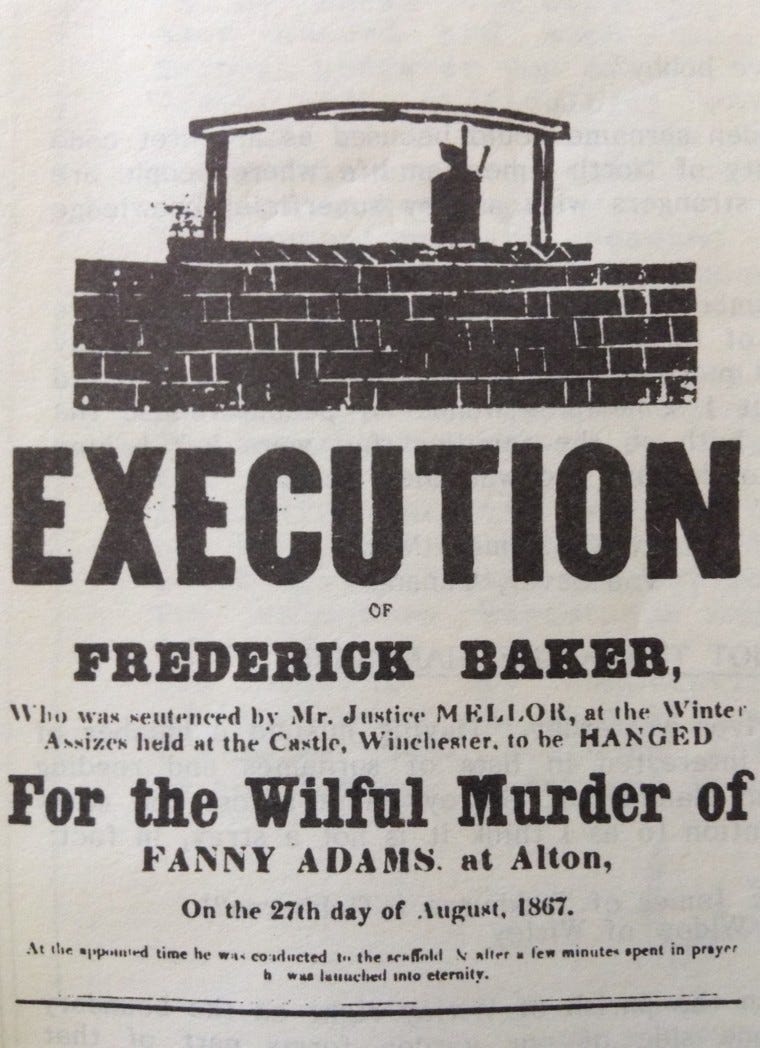
While Frederick Baker was being held at Alton Prison awaiting his trial, his behaviour appeared deeply disturbed. He was barely sleeping. He reportedly slept for only around an hour each night and was barely eating. He would even shudder at the sight of meat. A couple of months later, Baker was transferred to another prison, and his behaviour changed almost immediately. No one knows why his behaviour changed, but after his transfer, he began sleeping and eating normally again. He also spoke freely with the guards and joked with both them and the other prisoners. By all accounts, he appeared to be a completely different person after the transfer. On 5th December 1867, after just 15 minutes of deliberation, the jury found Frederick Baker guilty of the murder of eight-year-old Fanny Adams. Baker was sentenced to death and hanged on 24th December 1867, Christmas Eve, in front of a crowd of more than 5,000 people.
That brings us to the end of this case. Now, let me explain where the saying “Sweet Fanny Adams” comes from. I debated whether to include this because, honestly, it feels strange to end Fanny’s story with something so distasteful. But I imagine many of you recognised her name and wondered where you had heard it before. I should also say that I didn’t invent this saying. I’m simply explaining its origin, and it is undeniably distasteful. The saying “Sweet Fanny Adams” originated two years after Fanny’s murder, in 1869. That year, new tins of preserved mutton were introduced as rations for the British Navy, and they were reportedly unpopular among the sailors. A grim joke began circulating among the sailors: perhaps it wasn’t mutton in the tins at all. Perhaps it was the remains of Fanny Adams. Before long, “Fanny Adams” became slang for something worthless or of no value at all. And to this day, “Sweet Fanny Adams” is still used to mean absolutely nothing. A distasteful joke born from the murder of an eight-year-old girl, which somehow became a saying that has survived for more than 150 years.